
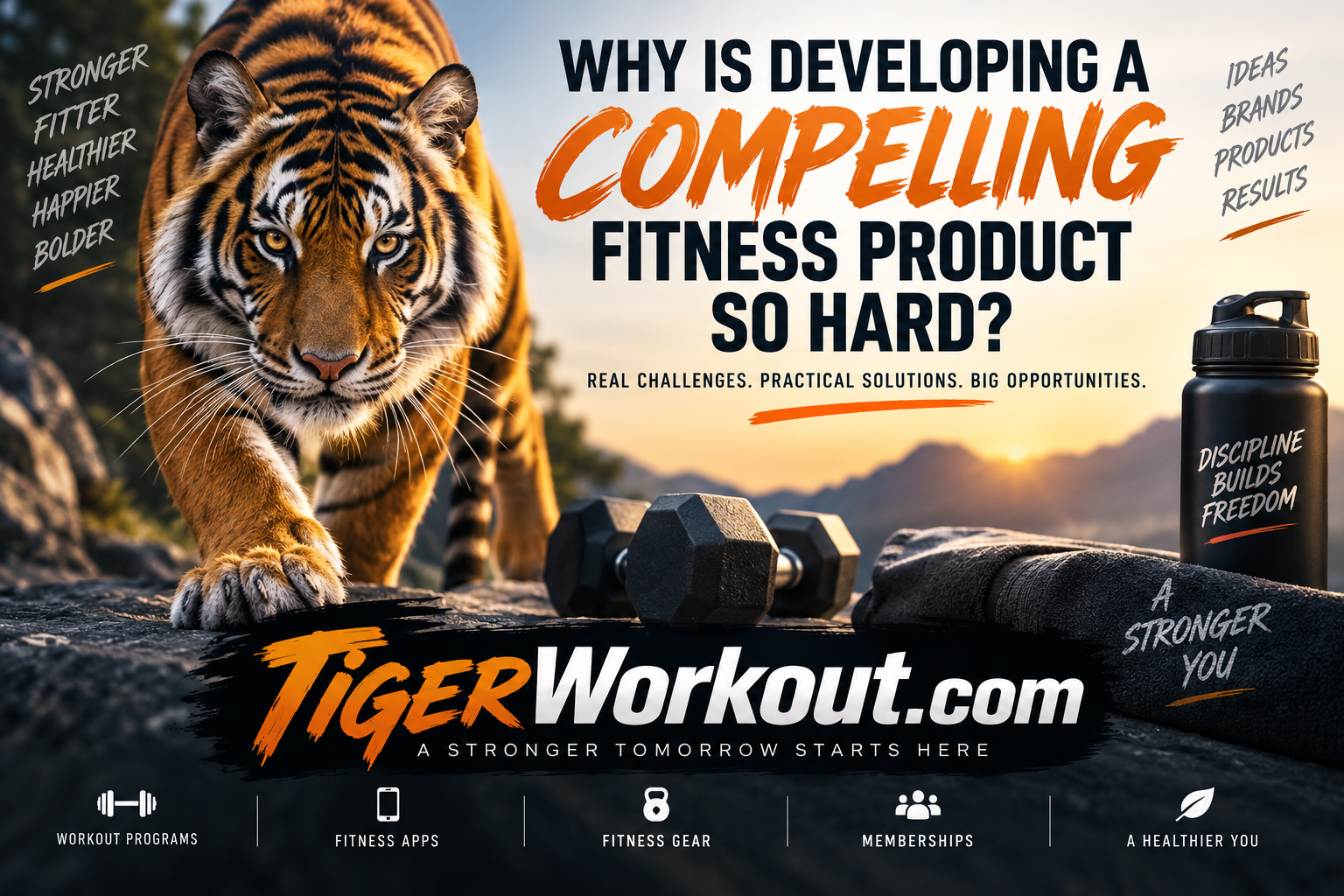
You have a fitness product idea that should work.
You research competitors. You add features. You improve the design.
Yet something still feels wrong.
The product sounds useful, but it does not feel compelling.
That problem frustrates many fitness product creators.
The fitness market makes product development look easier than it is.
Find a need. Create a product. Build a brand. Start selling.
But that simple plan leaves out the hardest part.
People already have countless ways to get fit.
They have gyms, apps, videos, watches, trainers, and home equipment.
They also have fitness products sitting unused inside closets.
Your product must compete with all of them.
More importantly, it must compete with doing nothing.
That changes everything.
1. Creating a Fitness Product Is the Easy Part
Creating a fitness product has never been easier.
You can find manufacturers, designers, software, and marketing tools online.
You can even build simple digital products within days.
But making something does not make people want it.
That difference causes much of the frustration.
Consider a new resistance band set.
You could improve the handles and include five resistance levels.
You could add a carrying bag and workout guide.
You could choose better colors and nicer packaging.
You still have one big problem.
Why should someone buy your bands instead of hundreds of others?
“Better quality” will rarely answer that question.
Neither will “easy to use” or “great for everyone.”
Your customer has heard those claims before.
A compelling product needs a sharper reason to exist.
It needs to solve a problem people already feel.
That problem must matter enough to change their behavior.
Most creators start with the product instead.
They ask, “What features should I add?”
They should ask, “What keeps frustrating my customer?”
Those questions lead in very different directions.
One creates another product.
The other can create something people actively want.
2. Useful Does Not Mean Compelling
This distinction matters more than most creators realize.
A useful product helps someone do something.
A compelling product makes someone want that help now.
Imagine two home workout products.
The first promises “a complete full-body workout at home.”
That sounds useful.
The second targets people who hate complicated home gyms.
It offers ten-minute strength workouts using one compact device.
Now the buyer can picture the benefit.
No spare room. No giant machine. No complicated setup.
That product attacks real friction.
The buyer thinks, “That sounds like me.”
That reaction matters.
A compelling product creates recognition before persuasion.
The customer sees a familiar problem inside the product.
That makes the product feel personally relevant.
Fitness also creates an unusual challenge.
People often know what they should do already.
They know movement helps.
They know strength training matters.
They know consistency produces better results.
Information alone does not solve their problem.
People struggle with putting that knowledge into daily life.
They get busy.
They lose interest.
Workouts feel too long.
Equipment feels confusing.
Progress feels slow.
The gym feels intimidating.
Those problems create product opportunities.
Yet many creators build around exercises instead.
They create another workout plan.
They launch another tracker.
They sell another set of bands.
Then they wonder why buyers seem indifferent.
3. Find the Friction Before Building the Product
Your customer may not need another workout.
She may need exercise that fits between work and caregiving.
He may need strength training without getting on the floor.
Another buyer may hate counting sets and repetitions.
Those are different problems.
They require different products.
You are not really designing equipment, software, or workouts.
You are designing a better path through customer resistance.
That requires knowing exactly where people get stuck.
Great product ideas often hide inside small moments.
Listen for statements like these:
- “I don’t have forty minutes.”
- “I hate changing all these weights.”
- “I can’t do exercises on the floor.”
- “I never know what workout to choose.”
- “This takes forever to set up.”
- “I forget to use it.”
- “I get bored after two weeks.”
Each statement points toward a possible product.
Notice what these statements do not mention.
They do not ask for more features.
They describe friction.
That friction matters because it blocks action.
Remove enough friction, and your product becomes more attractive.
Try one simple exercise.
Finish this sentence:
“My product helps people who hate ______.”
Maybe they hate crowded gyms.
Maybe they hate complicated meal tracking.
Maybe they hate storing bulky exercise equipment.
Then finish another sentence:
“Instead, they can ______.”
That blank describes the better experience.
Together, those sentences can shape a strong fitness product.
4. More Features Can Make Your Product Worse
Creators often respond to uncertainty by adding more.
More exercises.
More settings.
More attachments.
More tracking.
More lessons.
More bonuses.
Every addition feels like progress.
But extra features can hide the real problem.
Imagine an exercise device with twelve attachments.
Customers may only care about one result.
Perhaps they want stronger legs without getting on the floor.
Eleven extra attachments cannot fix an unclear core promise.
They may even make the product look harder to use.
The strongest product may actually do less.
It simply does one important thing very well.
Ask yourself one hard question.
What would customers miss most if you removed this product?
If you cannot answer quickly, keep working.
You probably have features without a strong core benefit.
Customers rarely want the actual fitness product anyway.
They want what happens after using it.
Nobody dreams about owning another fitness app.
They may want enough energy to play with grandchildren.
They may want stronger legs for climbing stairs.
They may want confidence inside a gym.
They may want exercise without feeling embarrassed.
Your product serves as a bridge.
Make that bridge feel simple and believable.
5. “Everyone” Is Usually the Wrong Customer
Many fitness products become weak because creators fear choosing.
They want the biggest possible market.
So they create something “for anyone wanting better fitness.”
That sounds safe.
It usually makes the product harder to sell.
Compare these two ideas.
“Home strength training for everyone.”
Now consider this one.
“Simple seated strength training for adults who dislike floor exercises.”
The second idea excludes people.
That can feel dangerous.
But it creates immediate meaning for the right buyer.
Specific products make customers feel understood.
Broad products make customers search for the connection themselves.
Most people will not do that work.
They simply scroll past.
Specificity also guides your product decisions.
A seated strength product needs certain exercises.
It needs clear instructions and easy movement choices.
It probably does not need jumping exercises.
The customer helps shape the product.
That makes development easier.
6. Stop Asking Whether People Like Your Idea
This mistake can destroy promising products.
You describe your idea to friends.
They smile.
“That sounds great.”
You feel encouraged.
Then nobody buys it.
Your friends probably were not lying.
You simply asked the wrong question.
People can like an idea without wanting it.
They can praise something they would never purchase.
Instead, study what people already do.
What products have they bought?
What have they stopped using?
What annoys them about those products?
What have they tried more than once?
Where do they keep failing?
Real behavior gives stronger clues than polite opinions.
Suppose someone owns three unused fitness trackers.
Do not immediately build a better tracker.
Ask why those three failed.
Maybe logging food became annoying.
Maybe constant notifications created stress.
Maybe the numbers never changed behavior.
Now you have something useful.
The opportunity may not involve better tracking.
It may involve needing less tracking.
That insight could create a much stronger product.
7. Your Product Needs One Clear Promise
Customers cannot want something they do not understand.
Many fitness products fail this simple test.
Their descriptions contain too many claims.
Build strength.
Burn calories.
Improve balance.
Increase energy.
Support flexibility.
Feel healthier.
Now nothing stands out.
Choose the main win.
You can still offer other benefits.
But one benefit should lead.
Imagine a compact exercise device for travelers.
Its main promise could stay simple.
“Get a full strength workout inside any hotel room.”
That creates a clear picture.
The buyer understands when the product matters.
That makes the product easier to remember.
Clear promises also create better products.
Every feature faces the same test.
Does this help deliver the main promise?
If not, question why you need it.
That discipline prevents product bloat.
It can also save you money.
What About Starting With a Great Fitness Brand Name?
Sometimes you find the customer problem first.
Then you develop the product and name the brand.
But another path can work too.
A strong name can spark a compelling product idea.
Consider TigerWorkout.com.
I currently have this domain available for purchase.
Think about the ideas already built into that name.
A tiger suggests strength.
It suggests energy.
It suggests focus and powerful movement.
“Workout” immediately tells visitors what space the brand occupies.
Now the product-development process can begin.
What fitness product could live under the Tiger Workout brand?
There are many possibilities.
You could create:
- A 20-minute home workout system
- A strength program for busy adults
- A bodyweight workout membership
- A fitness challenge program
- A workout tracking app
- A line of compact fitness equipment
- A sports training program
- A branded fitness gear collection
But remember the lesson from this article.
Do not build all of those things.
Start with one customer and one problem.
For example, Tiger Workout could target busy adults.
They want strength training but lack time.
The core promise might become:
“Strong, focused workouts in 20 minutes or less.”
Now the name has a purpose.
The product also has a direction.
You could build a digital workout program first.
That keeps startup costs low.
The program could offer four weekly 20-minute workouts.
Members could choose home or gym versions.
Later, the brand could expand.
Tiger Workout might add resistance bands or workout equipment.
It could add an app.
It could offer challenges and memberships.
It could even develop branded clothing.
But those products would share one central idea.
That is how a domain becomes more than a web address.
It becomes the foundation for a brand.
Why TigerWorkout.com Has Room to Grow
A strong domain should not trap your business.
It should leave room for new products.
TigerWorkout.com offers that flexibility.
The name does not limit you to one exercise method.
It does not limit you to one piece of equipment.
It does not even require one business model.
You could sell physical products.
You could sell digital programs.
You could build a membership.
You could develop an app.
You could create a content-driven fitness brand.
That flexibility matters when you are starting out.
Your first product may reveal your second opportunity.
Customer feedback may take the brand somewhere unexpected.
A flexible name gives you room to follow that demand.
At the same time, the name remains easy to understand.
People see “Tiger Workout” and immediately think fitness.
That gives you a useful starting point.
Want to Build Something Around TigerWorkout.com?
If these ideas have you thinking, TigerWorkout.com is available for purchase.
You are not just buying a place to build a website.
You are buying a name that could anchor a fitness brand.
You still need to choose the right customer.
You still need to solve a real problem.
And you still need to create a strong offer.
No domain can do those jobs for you.
But the right name can give your idea somewhere powerful to live.
Perhaps Tiger Workout becomes a 20-minute strength program.
Maybe it becomes a line of compact home fitness products.
Perhaps you see an opportunity I have not mentioned.
That is part of the value.
The name gives you a starting point without dictating the ending.
If TigerWorkout.com fits your vision, consider securing the domain first.
Then use the process in this article to develop the product.
Use This Seven-Question Fitness Product Test
Before spending serious money, answer these seven questions.
- Who is this product specifically for?
- What frustrating problem do they already have?
- When does that problem show up?
- What result do they want instead?
- Why have current options failed them?
- What does your product make easier?
- Why should they believe your solution will work?
Weak answers reveal weak spots.
That is good news.
Finding those problems now costs much less than finding them later.
Do not hide weak answers behind better graphics.
Do not add features because the product feels uncertain.
Do not copy competitors because they seem successful.
Go back to the customer.
Find the frustration.
Find the moment it happens.
Then build the simplest useful answer around that moment.
The Best Fitness Products Start With Frustration
Developing a compelling fitness product feels hard for a reason.
Building the actual product is only one piece.
Choosing the right problem is harder.
Understanding the customer is harder.
Removing friction is harder.
Making one clear promise is harder.
Saying no to extra features is harder.
Making the product fit real life is harder.
But this gives smaller creators an opportunity.
Large companies can build more features.
They can spend more on advertising.
They can hire larger design teams.
They cannot automatically understand your customer better than you.
That can become your advantage.
Find one group whose frustration keeps getting ignored.
Listen closely to what those people keep saying.
Notice what they already tried.
Then build around the missing piece.
Do not try to create the most impressive fitness product.
Create something that makes the right customer say:
“Finally. Someone understood what I actually needed.”
That is where a compelling fitness product begins.
And if you need a memorable brand for that idea, consider TigerWorkout.com.
Choose the customer. Find the frustration. Build the solution.
Then give that solution a name people can remember.