Launching a Cloud File Sync App? Why Your Domain Name Deserves Attention Before You Go Live
Moving from a software concept to a public launch involves more than building the application. Choosing the right domain name is an important part of giving your project a recognizable identity.
You’ve been working on an idea for a cloud file synchronization application. Perhaps you’ve been designing the architecture, developing a prototype, or planning how users will interact with the software.
Now you’re approaching an important transition: turning your project into something people can actually discover, visit, and potentially use.
This is the point when decisions that once seemed secondary begin to matter. Your application needs a name. It needs a website address. And ideally, those two elements should work together to communicate what you’re building.
For developers preparing to launch a cloud file synchronization service, choosing a domain name is more than an administrative task. It’s an opportunity to establish a clear identity for the product from the beginning.
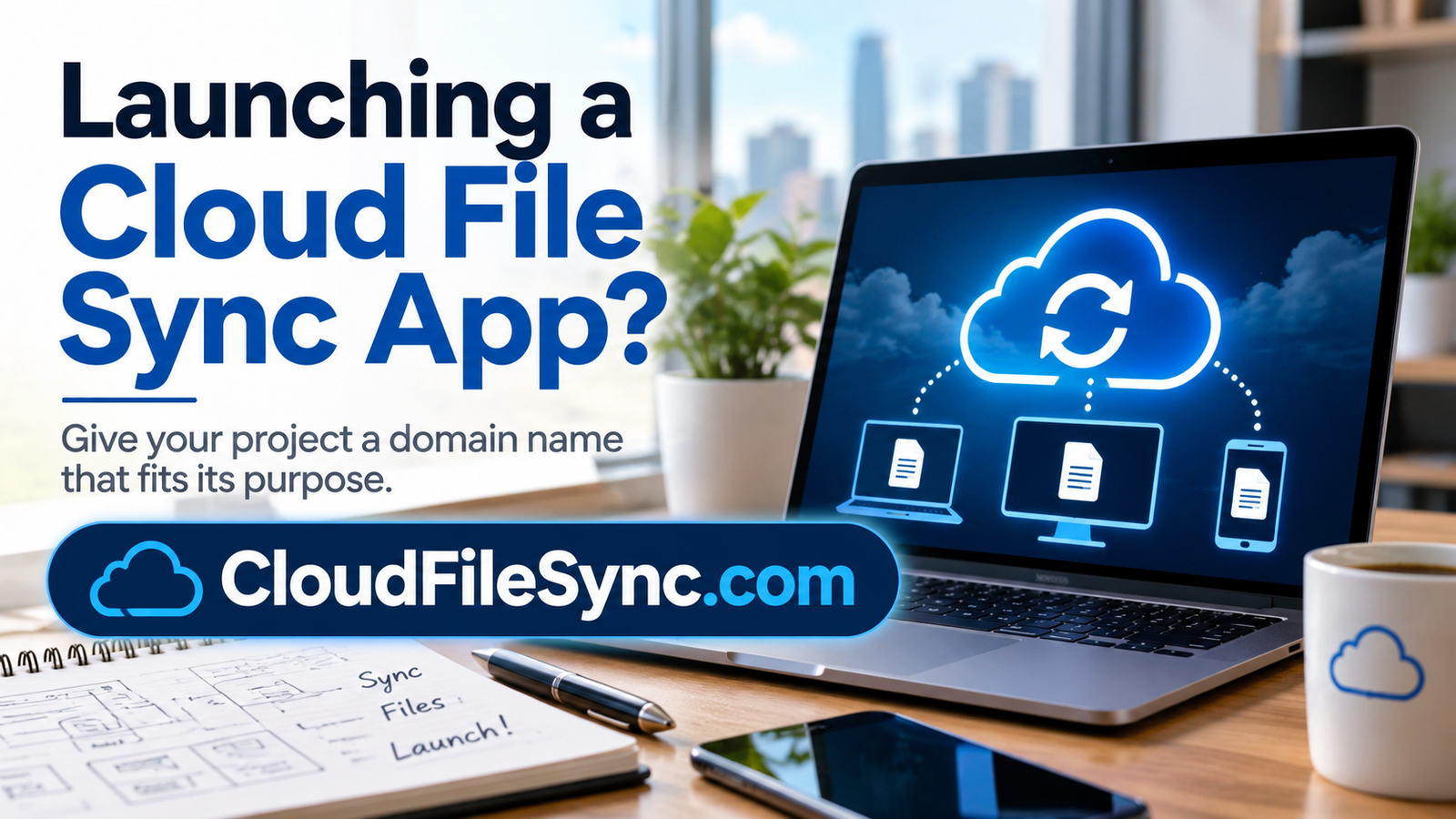
One option worth considering is CloudFileSync.com, a descriptive .com domain currently offered for sale through GoDaddy/Afternic.
But before considering any particular domain, it helps to understand why the naming decision deserves attention during the launch process.
1. The Transition From Development Project to Public Product
During early development, a software project can exist comfortably with a working title, an internal project name, or a temporary development address.
At that stage, functionality usually takes priority.
Developers may be concentrating on questions such as:
- How will files be synchronized between devices or cloud environments?
- How will the application handle changes to files?
- What will the user interface look like?
- Which features belong in the initial release?
- How will the application be presented to prospective users?
Eventually, however, the focus begins to expand beyond the software itself.
A public-facing product needs a recognizable identity.
Whether you’re preparing a landing page, organizing a product demonstration, or establishing a website for an upcoming release, the domain name becomes part of how people encounter your application.
This creates a natural buying trigger: the moment when your software project needs a permanent public address.
Instead of treating the domain as something to choose at the last minute, it may be worthwhile to consider it alongside your broader launch preparations.
2. Why Descriptive Domain Names Are Worth Considering
There are several approaches to naming a software product.
You might invent an entirely new brand name, combine unrelated words into something memorable, or choose a name that describes the application’s function.
Each approach has advantages and trade-offs.
An invented brand name may offer considerable creative flexibility. However, its meaning may not be immediately apparent to someone encountering it for the first time.
A descriptive domain takes a different approach.
It uses familiar language to suggest what the product or service is about.
For a cloud file synchronization application, the concepts of cloud computing, files, and synchronization are directly relevant to the product category.
A domain incorporating those terms can provide immediate context.
Consider the structure of CloudFileSync.com:
Cloud — Connects the name with cloud-based technology and services.
File — Identifies the type of digital content involved.
Sync — Suggests synchronization, the central function of the proposed application.
Together, these three words communicate a recognizable software category.
That doesn’t mean a descriptive name is automatically the right choice for every company. It does mean that developers seeking a straightforward product identity have a practical naming approach to consider.
3. Your Domain Name Should Fit the Application You’re Building
Before purchasing a domain, consider the intended scope of your application.
Is your project specifically focused on synchronizing files?
Will it be presented as a standalone cloud file synchronization service?
Are you developing software that helps users manage files across different environments?
Or are you planning a broader platform in which file synchronization is only one component?
These distinctions matter.
A highly descriptive domain can be particularly appropriate when the service it describes is central to the product.
For example, a developer launching a dedicated cloud file synchronization application may appreciate a domain that directly reflects that purpose.
On the other hand, a startup planning a much broader collection of unrelated software services might prefer a less specific brand name.
The important question isn’t whether descriptive names are universally better.
It’s whether the domain supports the identity you want to establish.
CloudFileSync.com is especially relevant to projects where cloud-based file synchronization is a defining part of the offering.
4. The Value of a Recognizable Website Address
When preparing a software launch, it’s easy to concentrate on the application interface while overlooking the website address.
Yet the domain may appear in several places during the product’s introduction.
You might use it on a landing page, in a product demonstration, within documentation, or when communicating with potential users and business partners.
A website address therefore becomes one of the recurring elements of your product identity.
This is one reason the .com extension remains a familiar choice for many software businesses.
CloudFileSync.com combines that familiar extension with wording directly related to the intended software category.
Of course, a domain name alone doesn’t establish credibility, attract visitors, or make a software product successful.
Those outcomes depend on many other factors, including the quality of the application, its usefulness, and how the business presents and promotes it.
The domain’s role is more specific: it provides a recognizable address and contributes to the product’s identity.
That’s a useful distinction when evaluating whether a domain purchase makes sense.
5. When Should You Choose Your Domain?
There’s no universal rule requiring a developer to purchase a domain at a particular stage.
However, certain project milestones naturally make the decision more important.
When the product concept becomes specific
Early in development, the project may still be changing direction.
Once you’ve decided that cloud file synchronization will be the application’s primary purpose, you can evaluate domain names against a clearer product concept.
When you begin preparing a public website
A landing page or product website needs an address.
Selecting a domain at this stage allows you to establish a consistent destination for visitors.
When you begin presenting the product externally
Whether you’re demonstrating a prototype, discussing a prospective partnership, or introducing the application to potential users, a consistent product name and website address can make your presentation more coherent.
When you’re preparing for launch
By the time you’re organizing launch materials, the domain decision becomes part of the practical work required to bring the product into public view.
If you’re approaching one of these milestones, it may be time to move domain selection from your future planning list to your current launch checklist.
6. Choosing Between a Newly Registered Domain and an Existing Domain for Sale
One decision developers may encounter is whether to register an available domain or purchase one that is already owned and listed for resale.
A newly registered domain may provide a relatively inexpensive starting point, depending on the name and extension.
However, the exact wording you want may not be available for ordinary registration.
In that case, you can explore alternatives or consider domains offered through resale marketplaces.
An existing domain offered for sale is not automatically more valuable or more suitable than one available for registration.
The decision depends on how well the name fits your project and whether the asking price makes sense within your plans.
For a developer who specifically wants a descriptive .com address related to cloud file synchronization, CloudFileSync.com is one option to evaluate.
The domain is currently listed through GoDaddy/Afternic with an asking price of $2,295.
That price should be considered as part of your overall naming and launch budget, rather than as a guarantee of the domain’s future commercial value.
7. Questions to Ask Before Purchasing a Domain for Your App
Before committing to a domain name, take some time to evaluate it from the perspective of your proposed software product.
Does the name describe the application’s central purpose?
If synchronization is a defining feature of your service, a domain that includes the word “Sync” may align naturally with the product.
Will the name still make sense as the application develops?
Consider whether your planned direction will remain focused on cloud file synchronization or expand into substantially different services.
Is the wording appropriate for your intended product identity?
Some developers want a distinctive invented brand. Others prefer straightforward, descriptive language. Choose deliberately.
Can the name be used consistently across your launch materials?
Think about how it will appear on your website, in product descriptions, and in communications with prospective users.
Does the asking price fit your budget?
A domain purchase is one element of a larger launch plan. Evaluate it alongside software development, hosting, design, and other anticipated expenses.
Have you completed appropriate checks?
Before purchasing, consider relevant trademark questions, domain history, and the marketplace’s current transaction terms. A domain listing does not, by itself, establish trademark clearance or a particular business outcome.
These questions can help you approach the purchase as a business decision rather than simply choosing a name you happen to like.
8. CloudFileSync.com: A Domain to Consider for Your Next Software Launch
If you’re developing a cloud file synchronization application, CloudFileSync.com offers a naming possibility worth examining.
Its primary characteristic is its descriptive wording.
The name combines three recognizable terms associated with the type of application you may be preparing to launch.
It could potentially serve as the website address for:
- A dedicated cloud file synchronization application.
- A SaaS product focused on synchronizing files.
- A cloud-based file management service with synchronization as a central offering.
- A developer’s new software project built around cloud file syncing.
These are potential uses for the domain, not existing features or services included with its purchase.
CloudFileSync.com is being offered as a domain name. Purchasing it does not include a completed application, an operating business, established traffic, or software functionality.
What it offers is the opportunity to acquire a descriptive .com address that may fit the identity of a cloud file synchronization project.
9. Give Your Application a Name That Fits Its Purpose
Launching software involves a series of decisions, from technical architecture to product presentation.
Some decisions determine how the application works. Others shape how people encounter it.
Your domain name belongs in that second category.
It won’t write your code, solve synchronization challenges, or bring users to your application automatically.
But it can provide a consistent public address and help communicate the focus of your project.
If you’re preparing to move a cloud file synchronization application from development toward launch, now may be an appropriate time to evaluate your naming options.
CloudFileSync.com is currently listed for sale through GoDaddy/Afternic for $2,295.
If the name aligns with the software you’re building, visit GoDaddy or Afternic and search for CloudFileSync.com to review the listing and current purchase details, or click the link above.
Your application begins with the technology you create. Its public identity begins with the name you choose.